ESG & Sustainability NETAJ Holding Group Audited · Documented · Quantified

Sustainability is our operating model, not our marketing.

Reclaim rubber, recycled aluminum, reused industrial land. Every tonne shipped carries documented CO₂ avoidance and an audited management system behind it.

01Pillars

Three letters.
Four decades of execution.

NETAJ's circular thesis was an ESG strategy before the term existed. The metrics, the certifications, and the workforce program are all consequences of one founding logic.

E

Environmental

95% material recovery on reclaim rubber from end-of-life tires. ~92% CO₂ avoidance vs. primary aluminum on every recycled tonne. Documented and audited per ISO 14001.

ISO 14001 · audited annually
S

Social

Saudi industrial jobs across plant operations, lab, logistics, and trading. Technical training programs that build long-term Saudi engineering capacity. Plant safety and IATF-grade workplace standards.

Saudization · HRDF aligned
G

Governance

Group QMS audited annually by accredited third-party certification body. Full document control, traceability, and customer audit-readiness across all four divisions. Single group balance sheet, division-level accountability.

ISO 9001:2015 · IATF 16949

Sustainability without numbers is sentiment.

95%
Material recovery
Reclaim rubber yield from end-of-life tires
−92%
CO₂ avoided
Recycled aluminum vs. primary smelting
100%
Closed-loop melt
Aluminum scrap to certified ADC12 ingot
04
Cert systems
ISO 9001 · ISO 14001 · IATF 16949 · ISPM 15
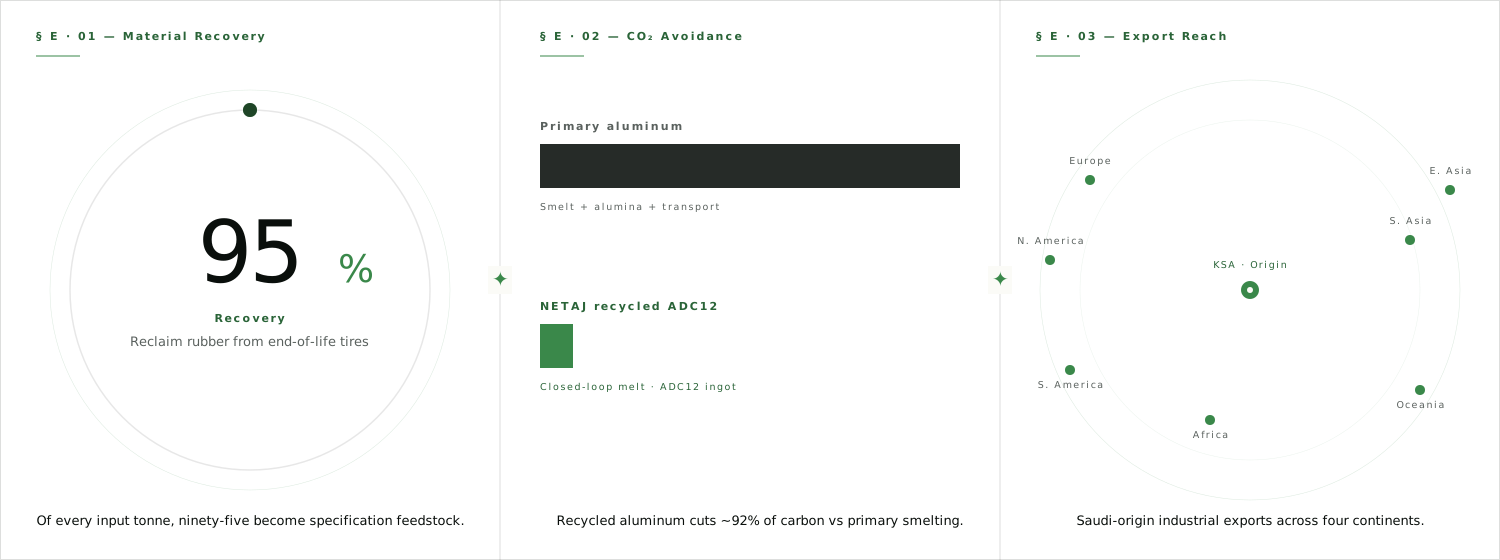
NETAJ ESG metrics: 95% material recovery, −92% CO₂ avoidance, 30+ markets across 4 continents
Material recovery · sourceISO 14001 reporting
CO₂ delta · sourcePrimary-aluminum industry consensus
Reporting periodCalendar year 2025

The topics that matter most to a circular industrial group.

E · 01

Per-tonne CO₂ avoidance documented and reported.

E · 02

Material recovery yields per division.

E · 03

Energy intensity per tonne of feedstock processed.

E · 04

Water usage and discharge in melt & reclaim operations.

S · 01

Saudi headcount & technical training hours.

S · 02

Plant safety — TRIR, lost-time incidents.

S · 03

Community contribution in operating regions.

G · 01

Audit findings and corrective-action closure rate.

G · 02

Customer audit cadence and outcomes.

G · 03

Supplier due diligence on incoming feedstock.

Annual ESG reporting begins 2026, aligned with the group fiscal year.

NETAJ's ESG disclosures will follow the cadence of audit cycles — published once external surveillance audits close and division metrics are validated. The first annual ESG report will cover environmental, social, and governance performance across all four divisions for the calendar year.

Disclosure framework alignment is being finalized — IFRS S1/S2 for sustainability disclosures, GRI for stakeholder reporting, and Saudi Exchange ESG guidance where applicable. Reporting will reference the same management systems audited under ISO 9001 and ISO 14001, ensuring data integrity rather than narrative.

Where data is not yet at audit-grade, we will say so. Sustainability reporting is governance, not marketing.

The circular thesis is
the ESG strategy.

Reclaim rubber, recycled aluminum, reused industrial land. The same operating model that produces our revenue produces our environmental, social, and governance performance. There is no separate ESG initiative because there has never been a non-circular NETAJ.

Read the circular thesis