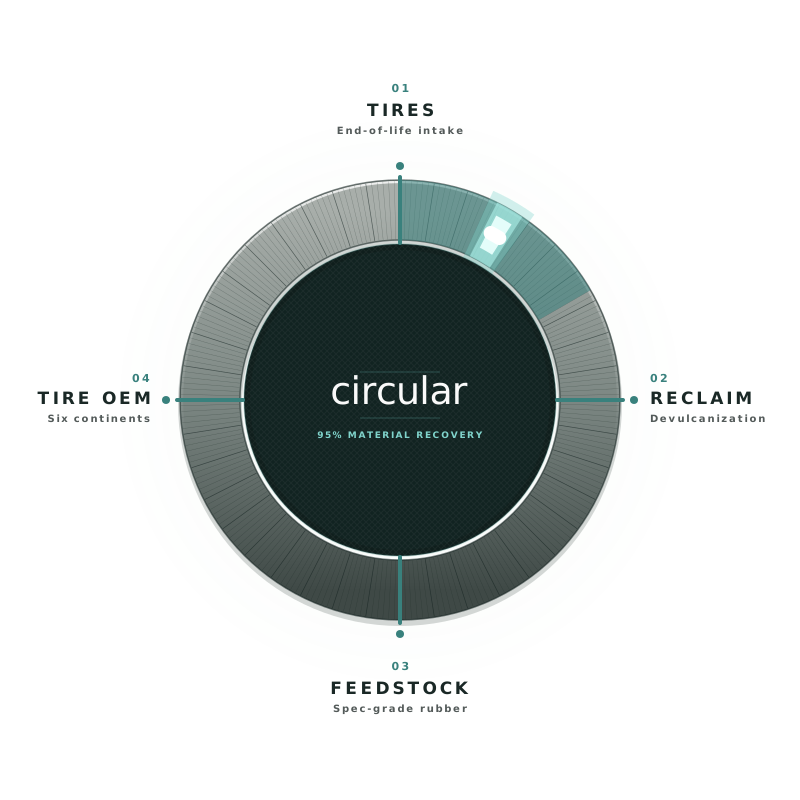
End-of-life tires return as feedstock.
Devulcanization at industrial scale recovers 95% of the input material. Eight grades shipped to tire OEMs across six continents.
"Sustainability" is defensive corporate posture. Circular economy is offensive industrial posture — and the latter is what the group has actually been operating, for four decades.
Two of NETAJ's seven divisions exist to recover what has already been mined or refined: rubber from end-of-life tires, aluminum from dross and scrap. A third — pallets — recovers and remanufactures used timber. The remaining four are the platforms that make the loop economically viable: trading moves the materials, real estate underwrites the plants, construction builds them, hospitality consumes them.
This page is the report. The numbers below are what the operations recovered, in 2025.
How devulcanization works at industrial scale, what the recovered material replaces, and the markets it serves — tire retread, sealing, footwear, conveyor belts.→
From dross to ingot, with documented CO₂ avoidance per tonne shipped. The metallurgy, the certifications, and the OEM-qualified customers downstream.→
What we report, what we measure, and how the operations contribute to local employment, training, and the Vision 2030 industrial localization agenda.→
The waste stream is the input balance sheet. End-of-life tires become reclaim rubber; aluminum dross becomes ADC12 ingot. Two streams. One principle.
Devulcanization at industrial scale recovers 95% of the input material. Eight grades shipped to tire OEMs across six continents.
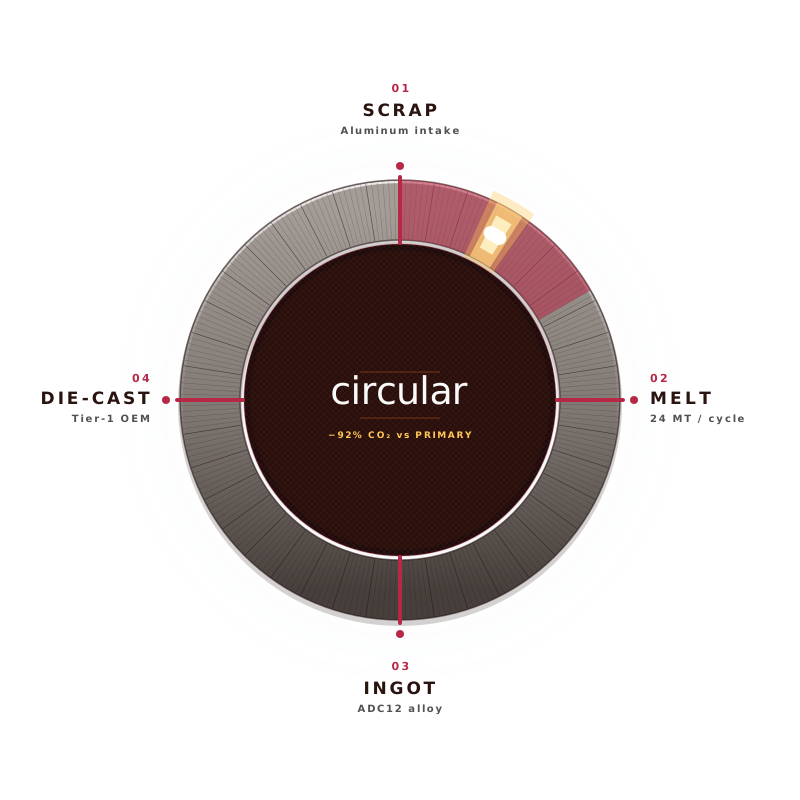
Closed-loop melt operations producing certified ADC12 ingot for tier-1 die-casters. ~92% CO₂ avoidance versus primary smelting.
End-of-life tires, aluminum dross and scrap, used pallets — collected from industrial and consumer waste streams.
Devulcanize, melt, refine, recondition. Industrial transformation back to specification-grade material.
ISO 9001, ISO 14001, IATF 16949. Mill certificates, lot traceability, third-party audits.
Material returns to the economy as feedstock — automotive die-casting, tire manufacture, FMCG logistics.
We measure ourselves in decades, not quarters.
Forty-five years of industrial operations, four divisions of recovery and recirculation, and a single thesis the group has executed across two generations of leadership.